

Your Legal Question, With the Article That Governs It
Ask in your own words; the answer comes with the article's text
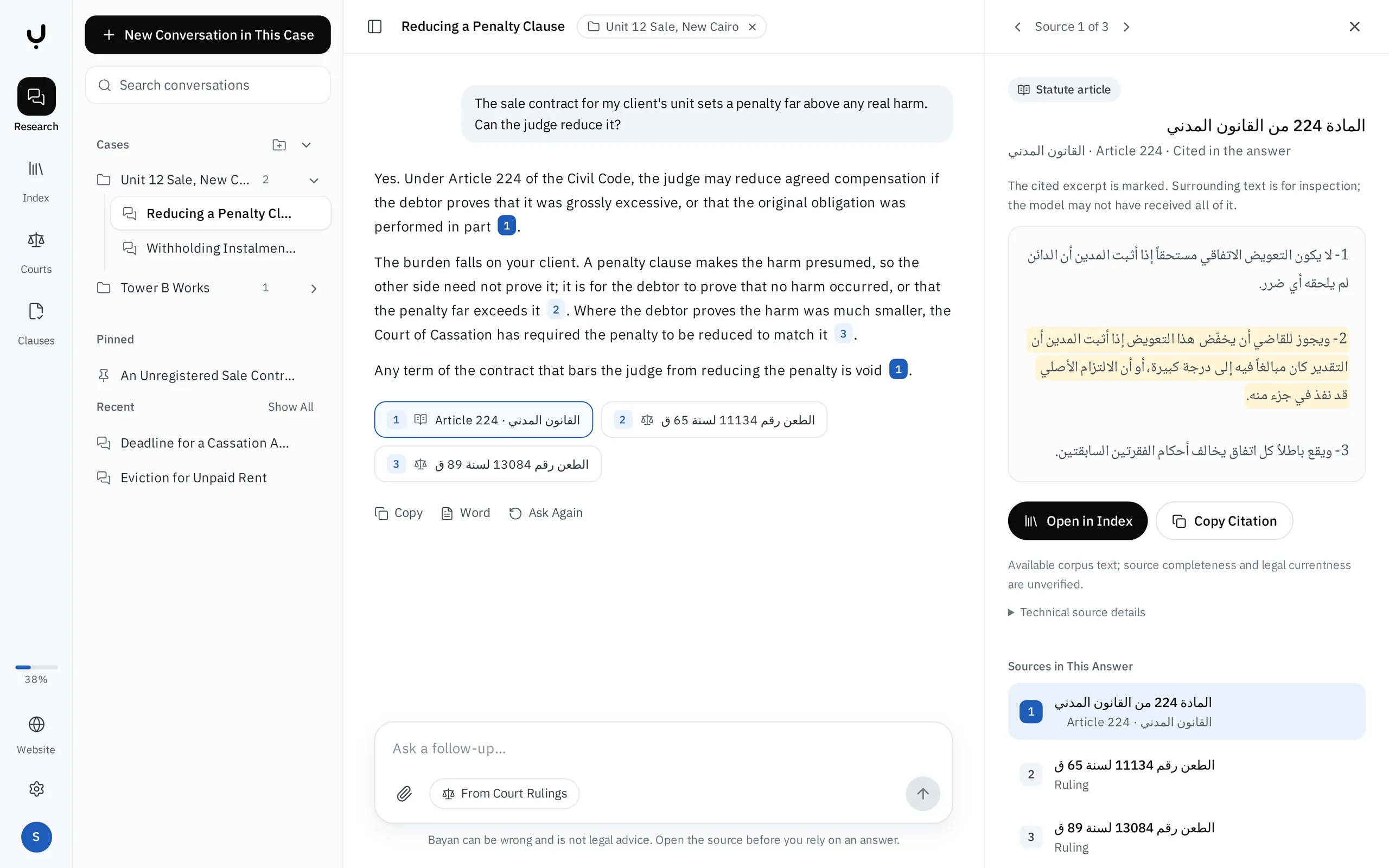
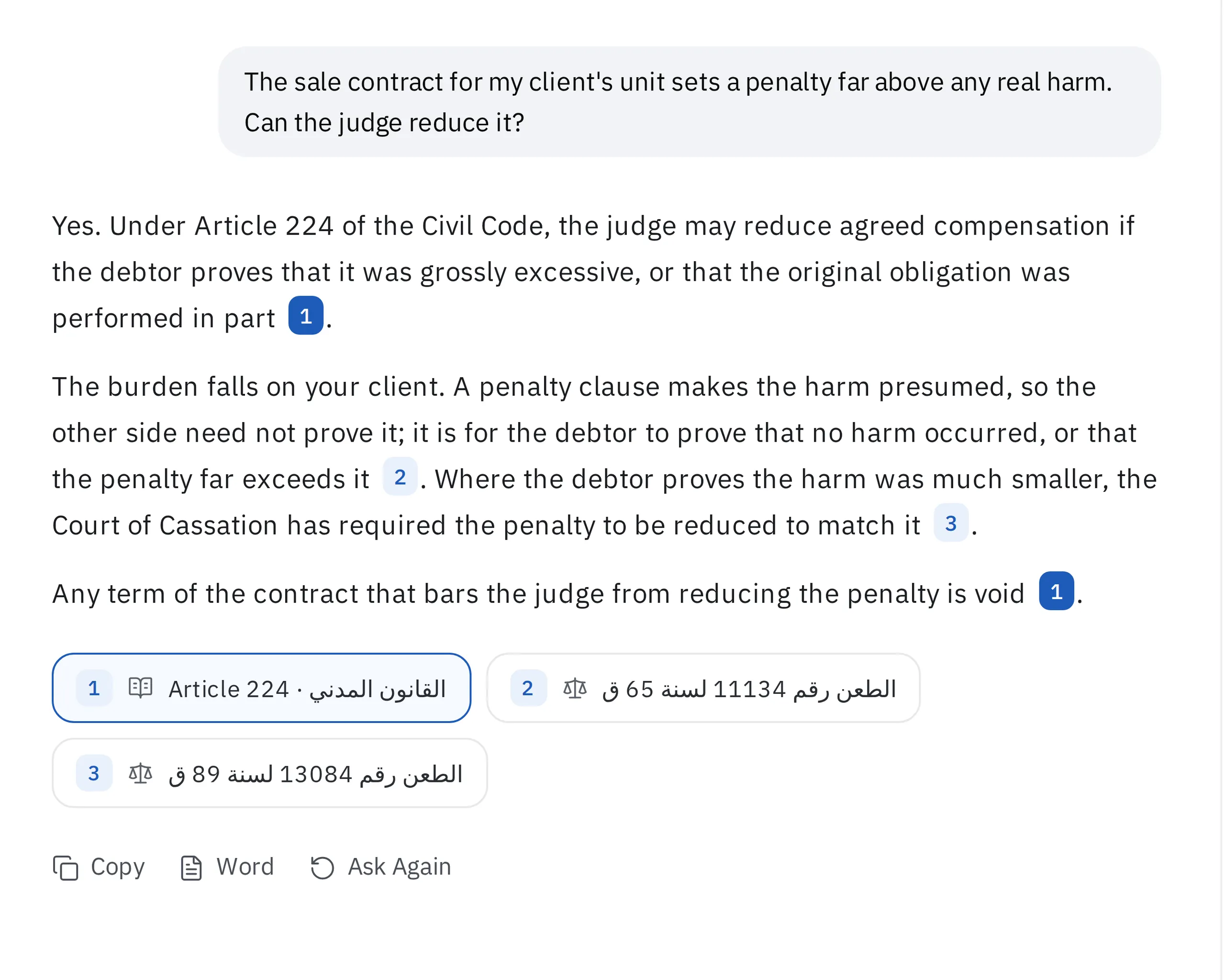
Every Answer Cites Its Article
Each legal statement in an answer carries its citation.The answer starts from Egyptian legislation, then draws on rulings and commentary.
- Egyptian legislation, by article number and text
- Ask in Arabic or in English
- In the profession's own terms
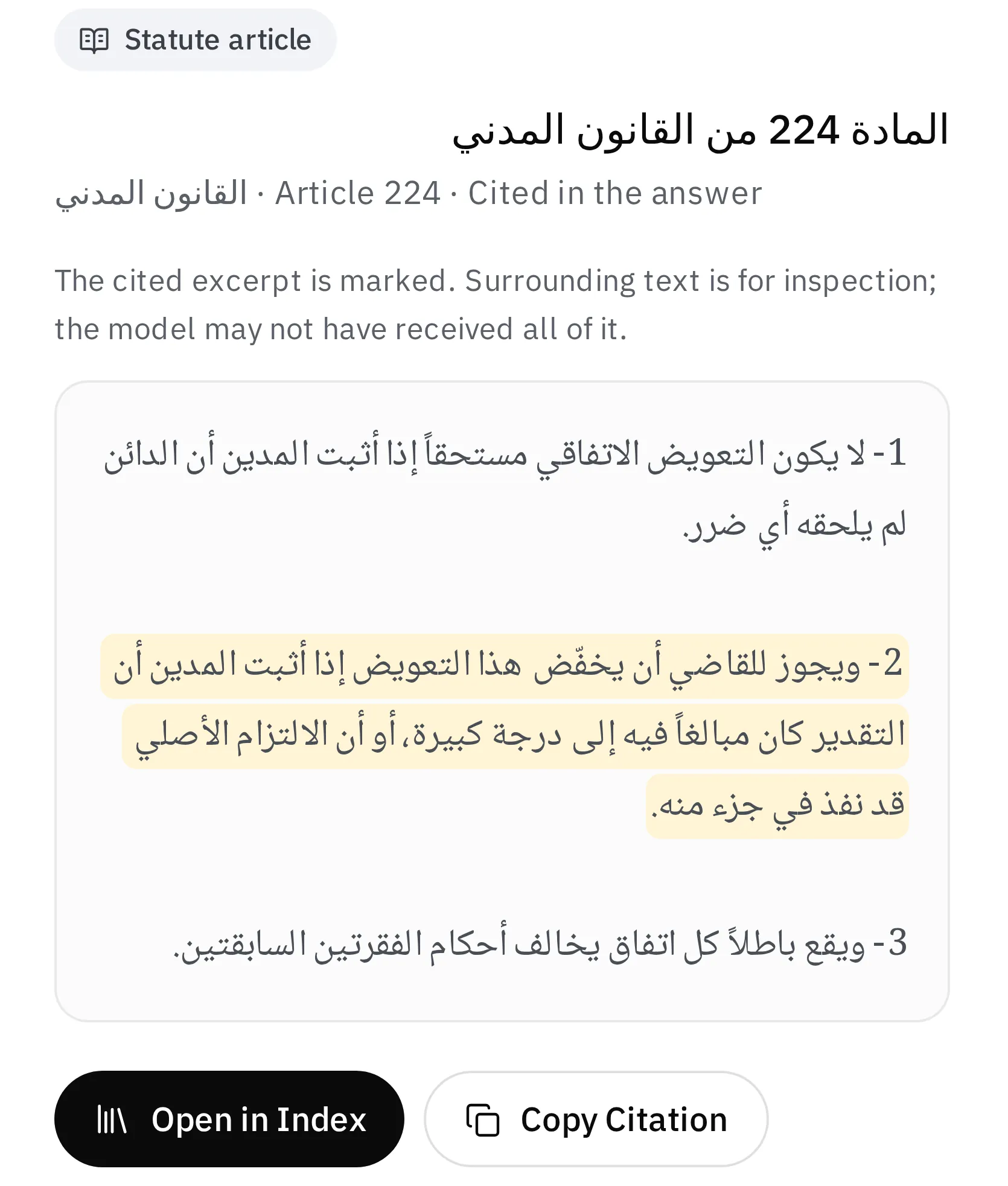
Open the Source Beside the Answer
Each citation opens the article in its original Arabic, with the cited passage highlighted.Open it in Index, or copy the citation.
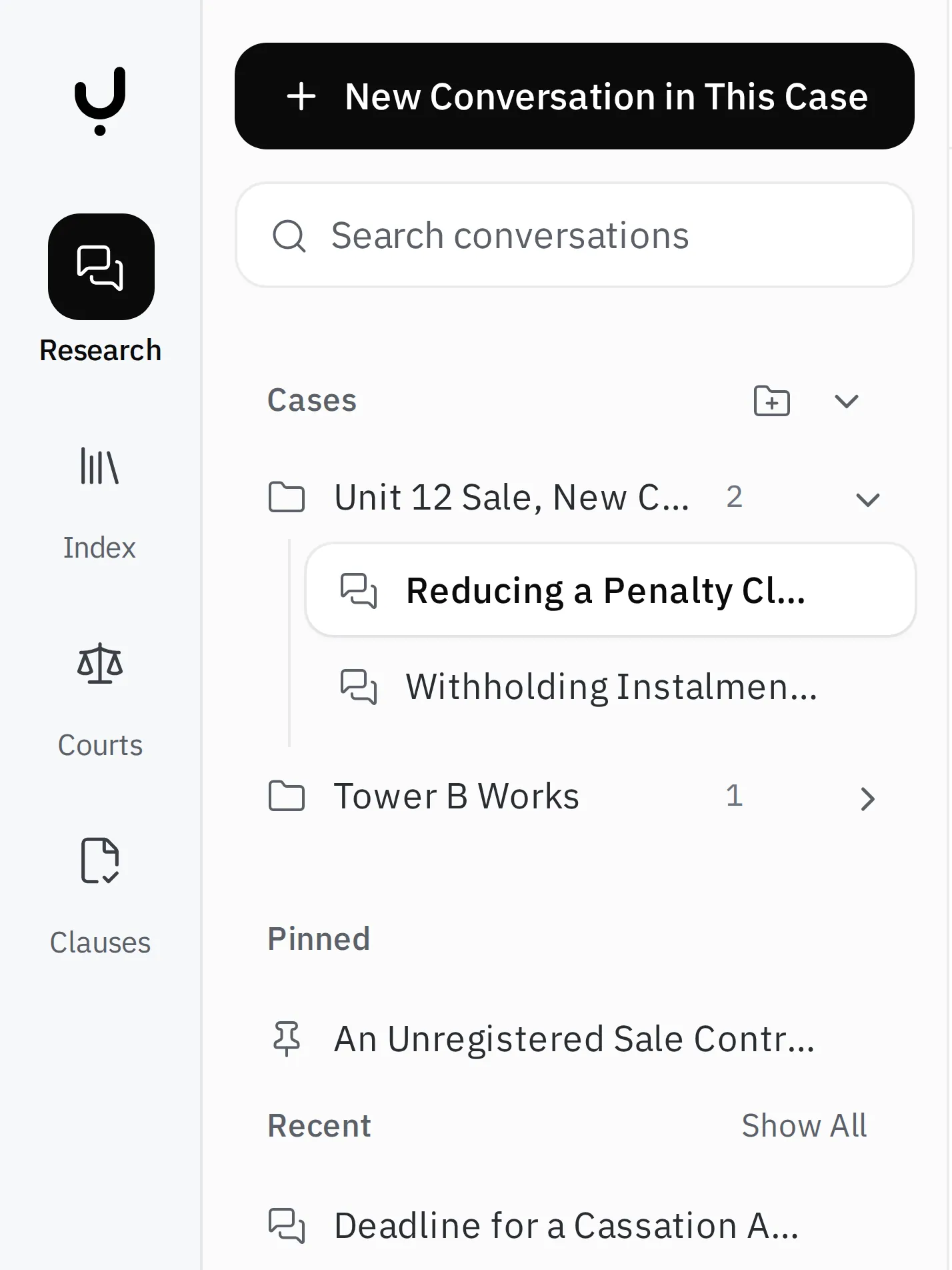
Your Chats, Kept by Case
Group conversations in a folder for each case, pin the ones you return to, and search your earlier chats.
Why a general model is not enough
A general model picks the most likely next word, so it writes an article number that looks right.
Bayan opens the article itself and puts it beside the answer.
A Real Example
Can a judge reduce a penalty clause if the obligation was partly performed?
"The judge may reduce this compensation if the debtor proves that the estimate was grossly excessive, or that the original obligation has been performed in part."
A real Bayan answer
Questions
Egyptian legislation first, with court rulings, ruling summaries, fatwas and legal commentary from the same library.For a rule of law it cites the legislation itself, and it uses rulings and commentary to show how that rule is read.International agreements and local decisions are searched only when your question concerns them.Describe the facts of your case and it looks for rulings decided on similar facts; to browse and search the rulings yourself, use Court Intelligence.
Yes, and Bayan opens that exact article rather than searching for it.Name the article with its law, by the law's number and year or by the code's name, for example Article 163 of the Civil Code.When a ruling it reads refers to an article, Bayan opens that article too and cites its text.
Yes, and the answer comes back in English.Bayan still searches the library in Arabic, whatever language you ask in, and every article it cites opens in its original Arabic text.
Open each citation and read the source itself.Every legal statement in an answer carries a citation, and each one opens the whole document with the cited passage highlighted.Bayan checks that every citation points to a document its search actually returned, which proves the source exists, not that the answer reads it correctly.That reading is yours to make.
It says so, and tells you what it searched.It is built not to state a law, an article number, a ruling or a date from memory, and every citation it gives must point to a document its search returned.If the answer turns on facts you have not given, it asks you for them.
Not always from the day they are published.New laws and amendments reach the library when we reload its data, so a very recent law or amendment may not be in it yet.Each article page shows whether the library marks it repealed and, where the library records them, its earlier wordings and the laws that amended it.Where nothing marks an article repealed, the page says so, and Bayan's answers do not describe it as in force.